Authorised Partner
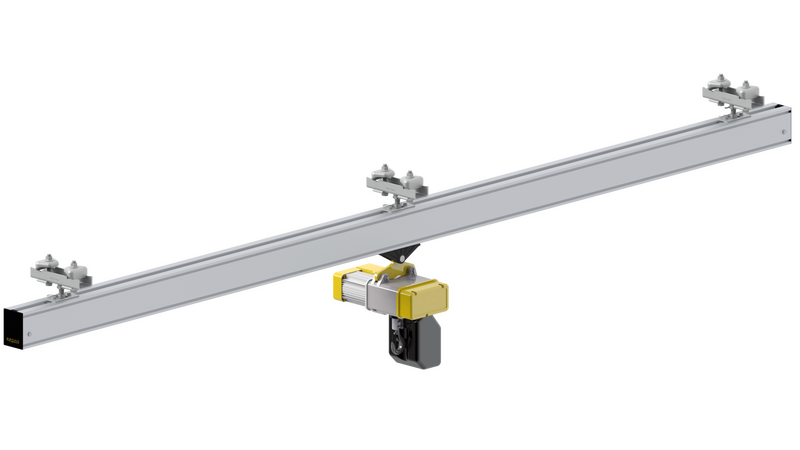
eepos Aluminium Crane Systems
eepos is a German manufacturer of modular aluminium crane systems engineered for loads up to 2 tonnes. Founded in 2006 in Wiehl, Germany, eepos systems weigh up to 70% less than conventional steel overhead cranes and install without building structural reinforcement — while remaining fully reconfigurable as production layouts change. eepos India Private Limited, the authorized Indian entity, has completed over 300 projects across India for Tata, Mahindra, John Deere, Volkswagen, Bosch, Cummins, Honda, and Alstom. Drishti Powertech LLP is an authorised supply partner for eepos systems across East India.
Send an Enquiry
We'll get back to you on WhatsApp.
Trusted by Industry Leaders





eepos one — Light Crane System (up to 2t)
Modular aluminium rail network for straight and curved track configurations; handles 50 kg to 2,000 kg with smooth, low-friction travel. Reconfigurable as production layouts evolve — no structural rework required.
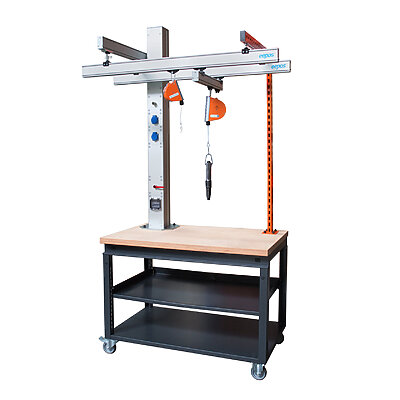
eepos nano — Workstation Crane (up to 75 kg)
Ultra-compact workplace crane for bench-level ergonomic lifting; ideal for assembly stations, quality inspection, and precision component handling in confined and space-critical production areas.
eepos move — Aluminium Lifting Axles (up to 500 kg)
Space-saving vertical lifting axes that integrate directly into the eepos rail system, enabling combined horizontal transport and vertical positioning in a single compact unit without a separate hoist.
eepos base — Media & Energy Columns
Clean, retractable columns for routing power, compressed air, data, and communication cables to workstations — eliminating floor-level hazards and supporting lean, tidy production layouts.
eepos eedrive — Electric Crane Motor
Integrated electric drive unit for motorized horizontal travel with push-button or radio control, providing smooth acceleration and precise load positioning anywhere along the rail network.
Pan-India Service & Installation Support
eepos India provides site surveys, system design via the online eepos crane designer, rail installation, commissioning, annual safety audits, and ongoing system health checks across India.
Why eepos Aluminium Crane Systems Outperform Conventional Steel Cranes
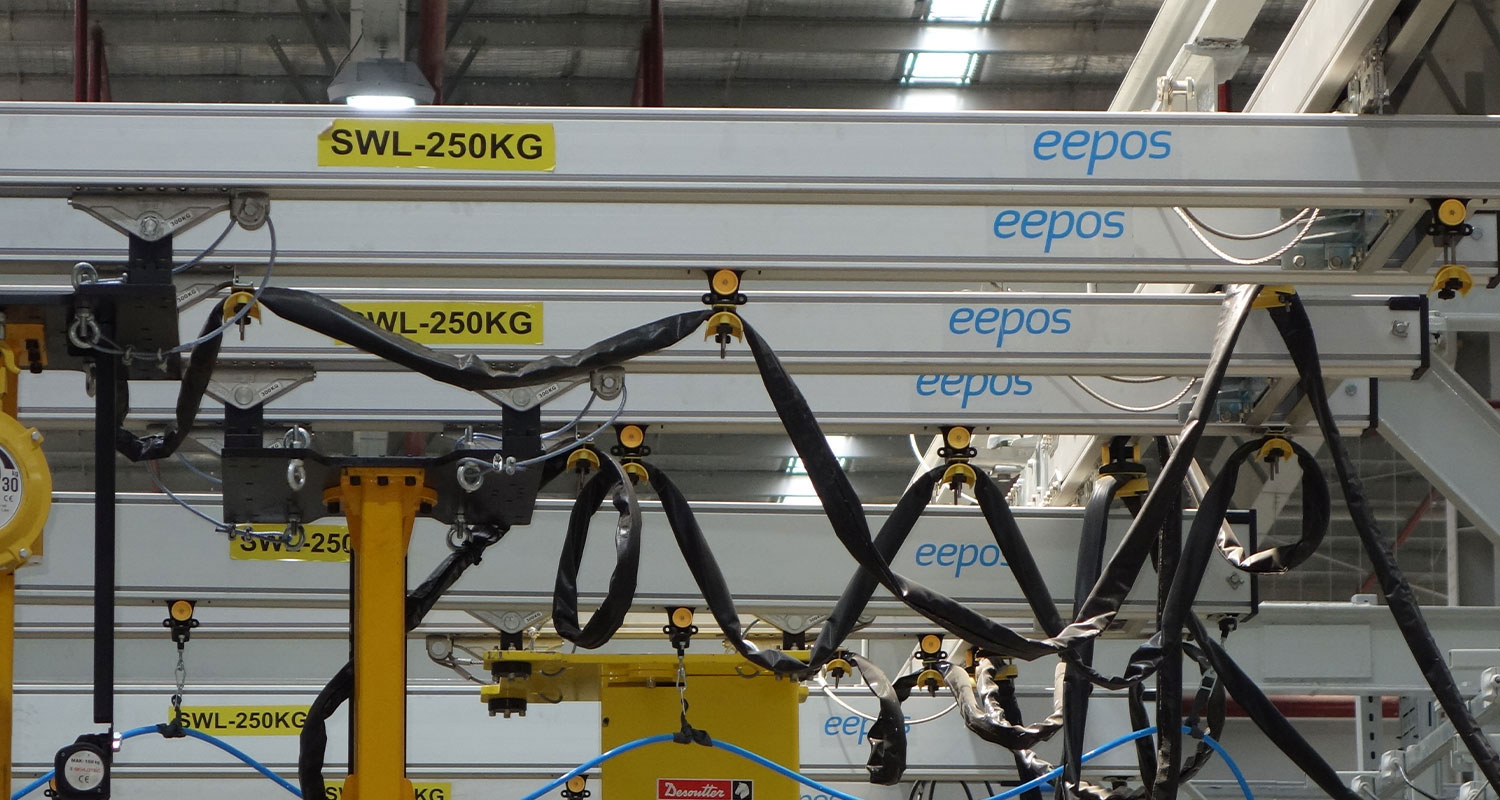
The structural advantage of eepos begins with weight. Aluminium rails weigh up to 70% less than equivalent steel profiles, enabling installation to standard warehouse purlin steelwork without costly structural surveys or reinforcement. The modular joint system — shared across eepos one, nano, move, and base — means components are interchangeable, extensions require no custom fabrication, and reconfiguring a system to a new production layout is a workshop task rather than a civil project. The eepos crane designer, a fully online configuration tool, allows engineers to input load requirements, span, and travel geometry to generate a validated component specification — removing manual selection errors and shortening procurement lead times. With over 2,000 completed projects globally and 300+ in India, eepos systems are proven in continuous-use automotive assembly environments where cycle times and uptime are non-negotiable.
Industries & Applications for eepos Crane Systems
eepos aluminium crane systems are specified most heavily in automotive assembly — John Deere, Tata, Mahindra, Volkswagen, Suzuki, Honda, and Hyundai all use eepos systems in Indian facilities for axle line assembly, body shop material supply, engine sub-assembly, and paint shop transport. In general manufacturing, eepos one systems handle ergonomic workpiece transfer in machine shop bays, welding lines, and press shops where conventional cranes are over-specified and too expensive to run at every station. Engineering service workshops use eepos nano workstation cranes for component inspection, tool positioning, and precision assembly where manual lifting creates musculoskeletal injury risk. The eepos base media column solution addresses the common factory challenge of routing compressed air, power, and data cables to moving assembly stations cleanly — eliminating trip hazards and cable damage in dynamic production environments.