SKF
Bearing Designs and Features (Spherical Plain)
SKF offers multiple spherical plain bearing designs and features to suit different mounting, load, and maintenance conditions: radial bearings (GE series) for combined loads, angular contact bearings for predominantly axial loads, thrust bearings for pure axial loading, and rod ends with male or female threads for direct linkage attachment. Design features include integral seals (2LS suffix), lubrication holes and grooves (where required), and corrosion-protective coatings. The bearing ring design can be one-piece or fractured (split outer ring) to allow a larger ball diameter and higher load capacity. Knowing the available designs and features enables precise matching of the bearing to the mechanical and environmental constraints of the linkage.
Send an Enquiry
We'll get back to you on WhatsApp.
Trusted by Industry Leaders




























Radial Bearings (GE)
Most common; handles combined loads and misalignment.
Angular Contact (GAC)
For high axial loads, typically used in pairs.
Thrust Bearings (GX)
Pure axial load, accommodates angular shaft misalignment.
Rod Ends
Bearing integrated into threaded housing, ready to mount.
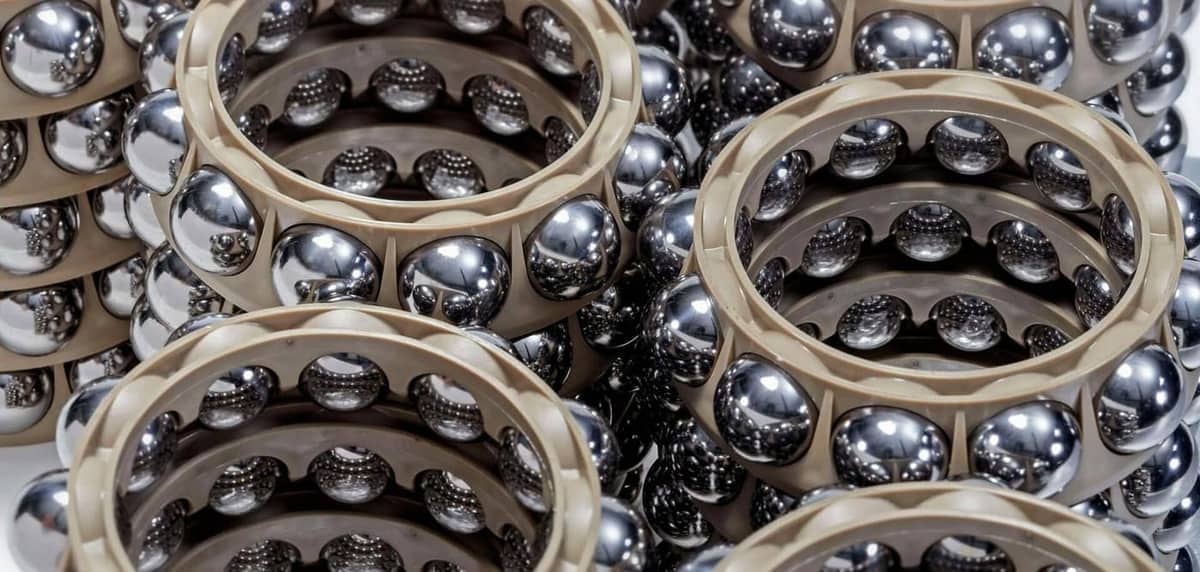
Fractured Outer Ring
Allows larger ball insertion for higher radial capacity.
Integral Seals and Lubrication Grooves
Factory‑installed protection and grease distribution.
Selecting a Fractured Outer Ring Design for Higher Load
In compact applications where a larger bearing is needed but the housing diameter is limited, a fractured outer ring design allows a larger ball diameter to be fitted. This provides up to 30% higher radial load capacity in the same envelope, a key design differentiator for heavy mobile machinery linkages.

Rod End Configurations: Male vs. Female, Right‑Hand vs. Left‑Hand
SKF provides rod ends with male or female threads, and with right‑hand or left‑hand threads. In a tie‑rod assembly, one right‑hand and one left‑hand rod end enable length adjustment by simply rotating the central tube. This mechanical simplicity reduces part count and adjustment time.