SKF
Combined Needle Roller Bearings
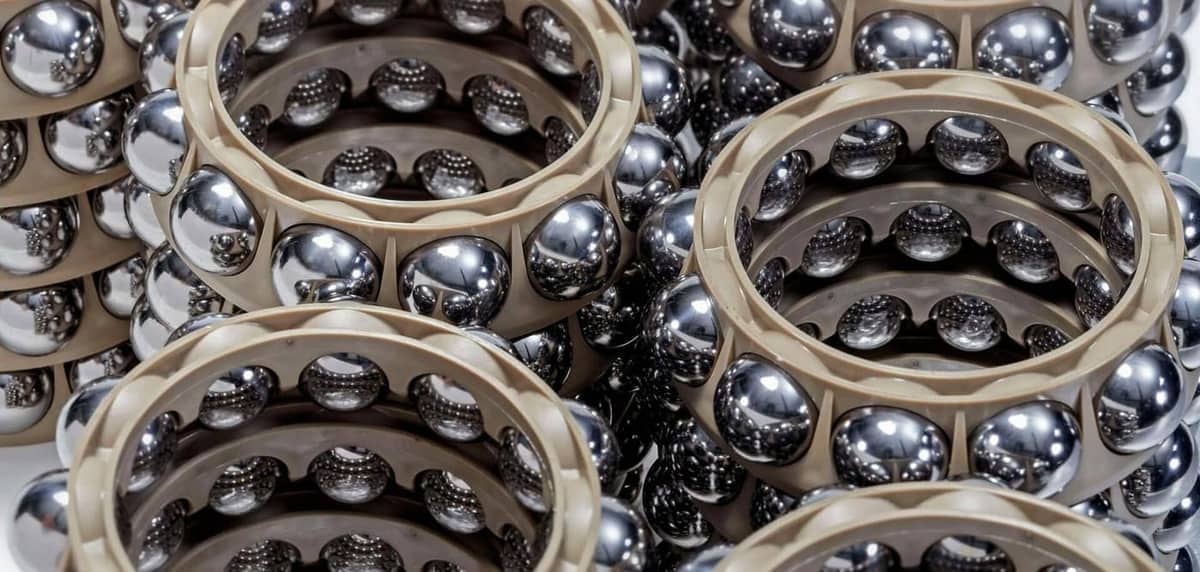
Combined needle roller bearings integrate a radial needle roller bearing with an axial bearing component (thrust ball or thrust needle) into a compact unit that supports radial and axial loads simultaneously. SKF offers versions for combined radial/thrust support as well as radial/thrust/thrust for bidirectional axial loads. Typical applications include machine tool slides, indexing tables, cam mechanisms, and linear motion guide systems. By providing both load supports in a single bearing, they simplify the design of bearing arrangements, reduce part count, and ensure precise alignment between the two load paths. SKF produces them as ready-to-install units with inner rings, tight tolerances, and lubrication pathways for maintenance.
Send an Enquiry
We'll get back to you on WhatsApp.
Trusted by Industry Leaders

























Support Radial and Axial Loads in One Unit
Replaces two separate bearings, saving space and cost.
High Precision
Tight axial and radial runout tolerances for accurate positioning.
Robust Construction
Needle rollers and thrust balls/needles within a single outer ring.
Integral Lubrication Channels
Grease paths to both radial and thrust sections.
Reduced Assembly Complexity
Fewer components to install and align.
Available in Metric Sizes
Standard dimensions for global machine tool and automation use.
Combined Bearings for Guide Rollers and Cam Applications
In cam-driven mechanisms, a combined bearing retains the follower while handling both radial cam forces and axial thrust from misalignment. SKF’s NX, NX…Z, and NKX series deliver these solutions, reducing play and wear in printing presses and packaging machinery.
Selecting the Right Combined Needle Bearing Configuration
Consider the dominant load direction: if axial load in one direction only, a unidirectional thrust bearing component suffices. If bidirectional, choose a dual thrust variant. The radial needle bearing is the same in all versions, rated for the system’s radial forces.