Tyrolit
Tyrolit External Cylindrical Grinding Wheels | OD Precision Grinding Solutions
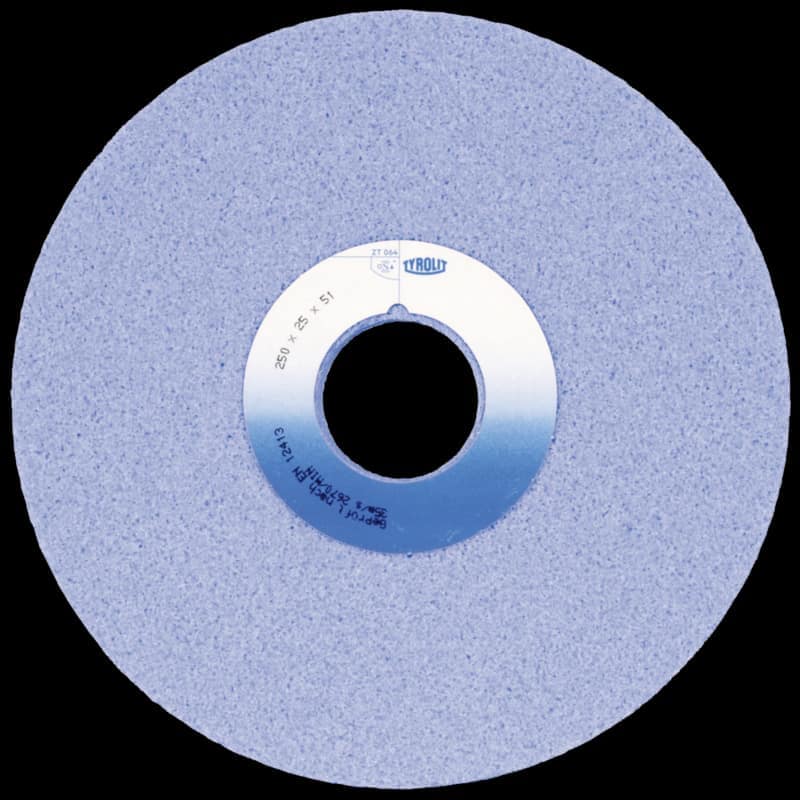
Tyrolit External Cylindrical Grinding Wheels are vitrified, resinoid, and rubber-bonded wheels specifically designed for outside diameter (OD) grinding of cylindrical components on both traditional cylindrical grinders and high-speed CNC OD machines. This application demands the grinding wheel to traverse or plunge into the rotating workpiece, removing material to achieve tight diametral tolerances, low runout, and fine surface finishes. Tyrolit’s portfolio covers the full spectrum: from large wheels grinding steel mill rolls several meters long to small wheels finishing hardened spindle shafts, automotive drive shafts, and hydraulic rods. The wheels are available in a wide array of abrasive types, with GENIS 2 ceramic grain promoting self-sharpening and low grinding force, allowing high infeed rates without inducing part deflection or thermal damage. Tyrolit’s external cylindrical wheels are specified by hardness grade and structure to balance wheel wear against cut rate. Special bonds for in-feed (plunge) grinding, angle-approach grinding, and traverse grinding ensure that the corner of the wheel retains its shape to grind shoulder fillets accurately. For high-alloy and hardened steels, CBN wheels on precision steel cores offer extreme dimensional stability and maintenance-free performance. Tyrolit’s process knowledge, including coolant nozzle design and parameter optimization, helps manufacturers achieve roundness under 1 micron and surface finishes below Ra 0.1 µm.
Send an Enquiry
We'll get back to you on WhatsApp.
Trusted by Industry Leaders

















GENIS 2 Porous Ceramic Grain for Soft, Cool Cutting
High porosity enables maximum coolant delivery, reducing the risk of grinding burn and enabling aggressive metal removal rates without compromising part integrity.
Wide Range of Wheel Widths and Diameters
From narrow 10 mm wheels for groove grinding to 300 mm wide wheels for long shaft traverse grinding, ensuring the optimal contact geometry for the part length.
Precision Shoulder and Fillet Grinding Bonds
Specially formulated corner-holding bonds maintain sharp edges and radii for plunge grinding shoulders and bearing journals, reducing the need for secondary corner dressing.
CBN Wheel Options for Long Runs and Hard Materials
Vitrified and electroplated CBN wheels provide virtually zero change in wheel diameter during a batch, eliminating the need for in-process gauge compensation on CNC grinders.
Tailored to Machine Dynamics
Wheels are balanced to different machine spindle stiffnesses, preventing vibration and harmonic chatter that degrades surface finish on slender parts.
Global Specification Support
Tyrolit engineers generate complete wheel specification proposals based on part print, material, and machine type, often including projected cycle time and cost-per-part savings.
Why Tyrolit External Cylindrical Wheels Are Specified for Demanding Automotive and Hydraulic Parts
In the production of electric vehicle motor shafts and hydraulic cylinder rods, the exterior grind must be mirror-smooth to ensure seal life and low noise. Tyrolit’s GENIS 2 ceramic wheels deliver exceptionally low grinding force, which is critical when grinding long, slender shafts that would deflect under the pressure of a conventional hard-grade wheel. The open structure prevents the wheel from “hydraulicking” on coolant, a phenomenon that causes vibration. For hardened chrome-plated rods, Tyrolit’s CBN wheels provide an ultra-consistent grind, eliminating variations in chrome thickness. By implementing Tyrolit wheels along with their recommended dressing parameters, manufacturers often report a 20–30% increase in parts per dress and a 10–15% reduction in scrap due to geometry errors.
Wheel Selection for Traverse vs. Plunge External Cylindrical Grinding
Traverse grinding uses a narrower wheel that moves laterally along the workpiece; it demands a harder grade wheel to resist wear at the edges. Plunge grinding uses a wheel as wide as the part feature; it requires a softer grade to allow the wheel to break down and expose fresh grain, preventing loading. Tyrolit’s application engineers distinguish between these modes to recommend the optimal bond hardness, grit size, and structure. The machine’s power, coolant system, and part material are all factored into the specification. Tyrolit also offers combined traverse-plunge wheels with stepped faces for grinding shaft diameter and face simultaneously.