Tyrolit
Tyrolit Honing & Finishing Tools | Precision Bore & Surface Finishing Honing Stones
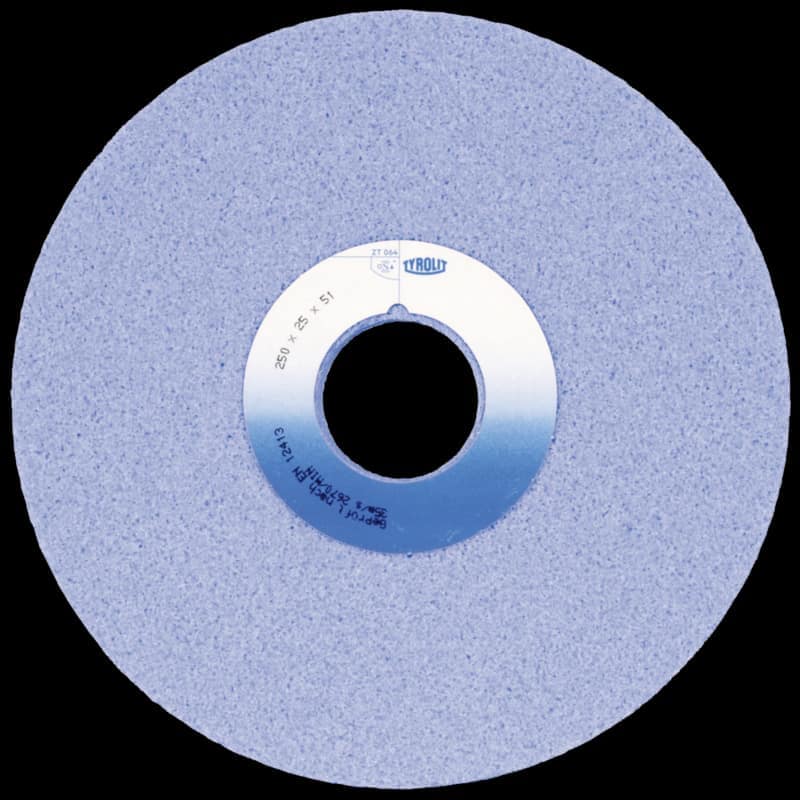
Tyrolit Honing and Finishing Tools encompass a comprehensive range of vitrified, resinoid, and metal-bonded honing stones, honing sticks, and guide shoes for the precision sizing, geometry correction, and superfinishing of bores, cylinders, hydraulic components, gears, and bearing surfaces. Honing is a low-speed, high-pressure abrasive machining process that removes microns of material to achieve tight diametral tolerances (IT4–IT6), straightness, roundness, and a specific cross-hatch surface texture ideal for oil retention. Tyrolit honing stones are manufactured from carefully graded aluminium oxide, silicon carbide, diamond, and CBN grains, embedded in bonds that provide controlled breakdown to continuously expose fresh abrasive. The stones are custom-manufactured to specific lengths, widths, and slot configurations to fit all major honing machine brands, including Sunnen, Nagel, Gehring, and Kadia. Applications span from engine cylinder liners and hydraulic valve bores to landing gear struts and fuel injector components. Tyrolit’s expertise in bond engineering prevents the glazing and loading that cause bore taper, ovality, and poor surface finish. The company also offers honing oils, tooling, and process development services, making it a complete honing system supplier. For high-precision industries, Tyrolit’s diamond and CBN honing stones deliver the ultimate in process capability and stone life, often enabling fully automated bore finishing.
Send an Enquiry
We'll get back to you on WhatsApp.
Trusted by Industry Leaders














Precision Bore Geometry Control
Tyrolit stones are engineered to correct roundness and straightness errors from pre-machining, achieving sub-micron cylindricity consistently across high-volume production.
Cross-Hatch Surface Texture for Lubrication
Controlled grit and bond porosity produce the precise plateau surface (Rk, Rpk, Rvk) required for optimal oil film formation in internal combustion engines and hydraulic systems.
Custom-Engineered to Sunnen, Nagel, and Gehring Machines
Stones are manufactured to fit exact mandrel slots, with standard and proprietary clamping mechanisms, ensuring secure retention and uniform pressure distribution.
Diamond and CBN for Uninterrupted High-Volume Production
Superabrasive honing stones provide thousands of bores per stone set, eliminating the frequent stone changes and size adjustments needed with conventional abrasives.
Range of Bond Hardnesses for Every Alloy
Tyrolit offers stones with bonds from soft to hard to match materials from soft cast iron to 70 HRC hardened tool steel and ceramics.
Integrated Coolant and Oil Recommendations
Tyrolit provides honing oil specifications to match the stone bond, preventing chemical incompatibility that can soften bonds or cause loading.
Why Tyrolit Honing Stones Are the Choice for Automotive Engine and Hydraulic Production
Honing is the final quality checkpoint for many critical components; the bore surface determines the part’s functionality and life. Tyrolit’s metallurgical and abrasive scientists work directly with engine plants to develop honing processes that meet specific emission and fuel efficiency targets. A precisely plateau-honed cylinder liner, for instance, reduces piston ring friction while maintaining oil consumption limits. Tyrolit’s CBN stones, in particular, have revolutionized cylinder honing by eliminating the variability and constant adjustment associated with vitrified stones. A single set of Tyrolit CBN stones can hone tens of thousands of engine blocks, maintaining size and surface finish with only automatic in-process gauging. This repeatability is the foundation of lean high-volume manufacturing, removing operator skill from the equation and maximizing the output of expensive honing stations.
Selecting the Right Honing Stone: Conventional vs. Superabrasive
Material hardness dictates the choice. For soft to medium-hard cast iron and mild steel, conventional vitrified stones are economical and effective. For hardened steel (>50 HRC), high-nickel alloys, and ceramics, diamond and CBN stones are necessary to cut effectively without glazing. Tyrolit’s process engineers conduct an audit of the current honing operation—measuring stones per bore, dress frequency, and scrap rate—and provide a comparative analysis showing the return on investment of moving to superabrasives. The transition is supported by on-site testing and parameter optimization to ensure the honing machine’s full performance is realized.