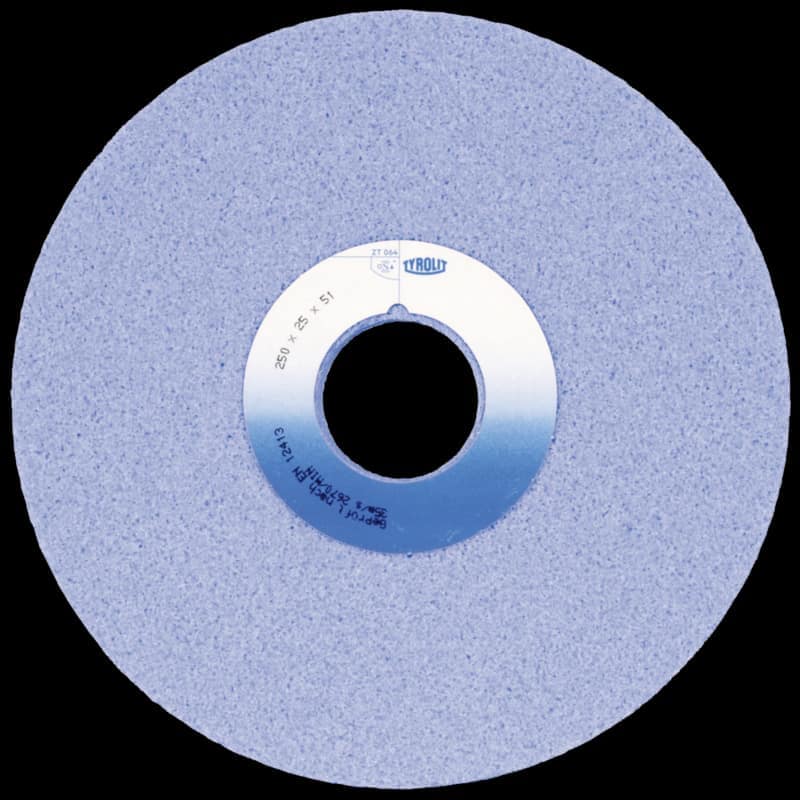
Tyrolit
Tyrolit Pedestal & Reciprocating Grinding Wheels | Bench & Swing-Frame Foundry Snagging
Tyrolit Finishing and Polishing Tools form a comprehensive category dedicated to transforming rough-ground surfaces into aesthetically and functionally superior finished products across metalworking, woodworking, composites, stone, and concrete industries. The range is uniquely broad, encompassing everything from non-woven abrasive discs and fleece rolls to elastic mounted points for intricate die polishing, flap wheels for weld seam blending, bristle brushes for surface texturing, and polishing pads for achieving mirror-grade gloss. Tyrolit understands that finishing and polishing are not just about appearance—they directly impact fatigue strength through surface stress relief, coating adhesion through optimized surface profiles, cleanliness through removal of micro-corrosion, and product value in consumer-facing goods. The company’s finishing abrasives incorporate advanced grain technologies (aluminium oxide, silicon carbide, ceramic) bonded to flexible or semi-flexible substrates that conform to part contours while delivering controlled, repeatable surface finish parameters in Ra (roughness average) values. The category is structured around workflow logic: from initial surface conditioning and weld cleaning, through intermediate fine grinding and satin finishing, to final high-gloss polishing and cleaning. Metal fabricators, stainless steel processors, automotive refinishers, mold and die makers, stone masons, and concrete polishers all source Tyrolit finishing and polishing tools for the consistent, contaminant-free surface quality that their customers demand.
Send an Enquiry
We'll get back to you on WhatsApp.
Trusted by Industry Leaders











Engineered for Swing-Frame Lever Forces
Large-diameter reciprocating wheels feature reinforced vitrified bonds and dense backing layers to resist the amplified forces generated by the extended swing-frame arm, preventing catastrophic wheel burst.
Self-Dressing Vitrified Bond Technology
Vitrified wheel bonds are formulated to wear at a controlled rate, continuously exposing fresh abrasive and maintaining a sharp, flat grinding face without frequent manual dressing.
Tonnes-of-Castings-Per-Wheel Economics
Tyrolit pedestal and swing-frame wheels consistently deliver higher metric-ton throughput per wheel than generic alternatives, minimizing procurement orders and wheel-change downtime.
Ceramic Grain for the Heaviest Applications
Tyrolit’s CERABOND X ceramic wheels for pedestal and swing-frame grinders deliver up to 40% higher stock removal rates on tough alloy steel castings compared to standard aluminium oxide wheels of equivalent specification.
Custom Diameter and Profile Availability
Wheels can be manufactured in bespoke diameters up to 1,200 mm, with specialized face profiles for grinding specific casting features—radii, channels, and contoured surfaces—in a single operation.
Global Standard Machine Compatibility
Wheel bores, plate mountings, and flange designs are produced to fit all common foundry grinder brands, eliminating the need for special adapters or machine modifications.
Why Tyrolit Pedestal and Swing-Frame Wheels Are the Foundation of Foundry Productivity
Despite the growth of robotic fettling, pedestal and swing-frame grinding remains the primary method for cleaning large, complex castings that cannot be economically automated. Tyrolit’s long history of serving foundries gives it a deep understanding of this environment. The vitrified bond technology used in Tyrolit pedestal wheels is a direct descendant of the company’s century of ceramic bond development. The bond’s controlled brittleness ensures that wheel wear is progressive and predictable, maintaining a flat wheel face that contacts the casting uniformly—this is crucial for operator control and for preventing the localized overheating that causes casting surface cracks. For swing-frame grinding, where the wheel may be 600 mm in diameter and rotating at 12,000 SFPM, the structural integrity of Tyrolit wheels provides the security that foundry safety managers require. The wheels are speed-tested to 150% of maximum operating speed as part of the oSa® certification process, and batch traceability ensures immediate recall capability in the unlikely event of a quality excursion.
Optimizing Pedestal and Reciprocating Wheel Selection for Foundry Alloys
The interaction between wheel specification and casting alloy is critical. Grey iron—the most common ferrous casting alloy—generates friable, abrasive swarf that demands soft-grade, open-structure vitrified wheels to avoid loading and to promote continuous self-sharpening. Ductile iron and carbon steel castings require slightly harder bonds and coarser grit to manage the tougher, stringier metal removal. Stainless steel and high-alloy castings demand ceramic grain wheels to cut efficiently without generating the excessive heat that causes oxidation and work-hardening. Non-ferrous castings (aluminium, brass, bronze) require ultra-open wheel structures with specialized bond additives that prevent the soft metal from loading and smearing across the wheel face. Tyrolit’s foundry application specialists can analyze your casting mix and recommend a minimum number of wheel specifications that cover all alloys with optimal performance—reducing inventory complexity while maximizing tonnes-per-wheel across the operation.