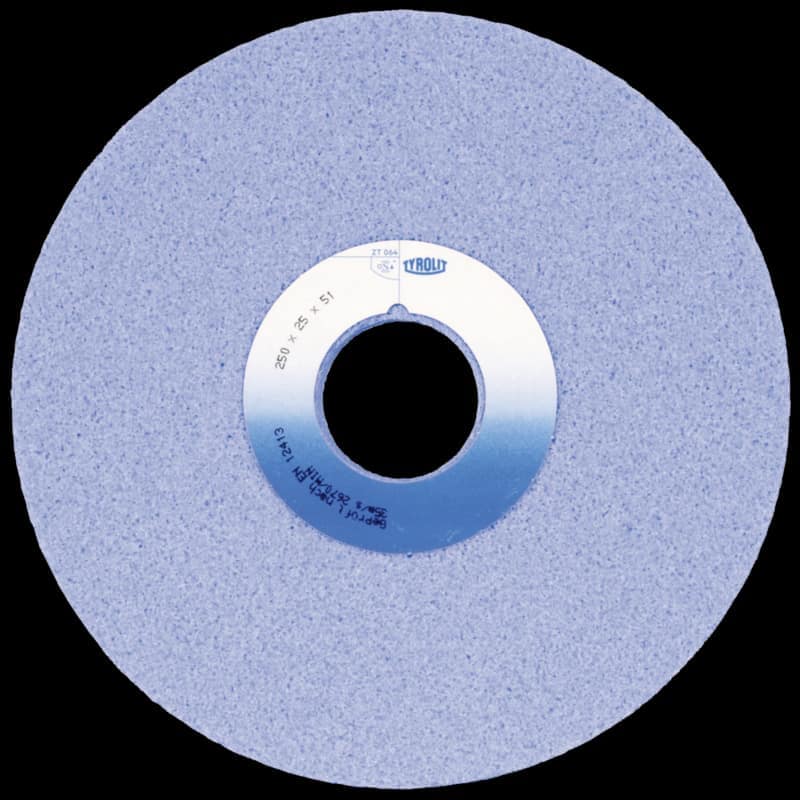
Tyrolit
Tyrolit Rough Grinding Tools | Aggressive Diamond & Abrasive Floors Flattening
Tyrolit Rough Grinding Tools are engineered for the heaviest stage of floor preparation: high-stock removal, concrete flattening, lippage elimination, rain-damage resurfacing, and the removal of shallow coatings and surface contaminants. These tools employ extra-coarse diamond grits (16–30 grit) in extremely durable metal bond matrices that can withstand massive machine weight and sustained high-pressure grinding. Available in trapezoid, round, and block segments for all Tyrolit and compatible planetary grinders, these tools aggressively reduce slab unevenness and expose aggregate. Tyrolit’s metal bond technology for rough grinding features precisely controlled diamond distribution and bond hardness that ensures continuous self-sharpening, even when grinding hard, high-psi concrete. The tools are also formulated to handle the abrasive dust load of heavy concrete removal without the segment erosion that prematurely wears out inferior products. For contractors restoring floors in warehouses, factories, or large commercial spaces, the performance of rough grinding tools dictates the entire project pace: faster flattening means fewer overall passes. Tyrolit rough grinding consumables deliver lowest cost per millimeter removed, reduce machine strain, and set the foundation for a flawless polished floor. These tools are an integral part of Tyrolit’s surface preparation workflow, bridging initial condition to the transitional refinement stage.
Send an Enquiry
We'll get back to you on WhatsApp.
Trusted by Industry Leaders













Maximum Stock Removal Rates
Extra-coarse 16–30 grit diamond with open, aggressive bond structures removes up to 3 mm of concrete per pass, rapidly correcting unevenness, high spots, and trip hazards.
Durable Metal Bond for Long Operating Life
Formulated to resist bond erosion in highly abrasive concrete dust, ensuring that the diamond remains bonded and cutting effectively until the tool is fully consumed—no premature diamond pullout.
Optimized for Planetary and Direct-Drive Grinders
Tool weights, dimensions, and segment layouts are designed to maximize the utilization of machine weight, applying consistent pressure and preventing “chattering” during rough grinding.
Consistent Surface Profile for Subsequent Steps
The uniform deep scratch pattern produced by Tyrolit rough tools is systematically eliminated by the next grit, reducing the number of transitional passes needed and saving time.
Dry and Wet Operation Capable
Most Tyrolit rough grinding tools perform efficiently dry with dust extraction, or wet for maximum cooling and diamond life when flattening very hard concrete.
Quick-Change Mounting for Grit Progression
TQC system allows fast transition from rough 16-grit to 30-grit without downtime, maintaining project momentum.
Why Rough Grinding Tool Selection Determines Project Profitability
The initial flattening pass sets the productivity ceiling for any floor preparation project. If rough grinding tools are slow, glaze, or wear out prematurely, every subsequent hour on the job costs the contractor money. Tyrolit invests heavily in the metallurgy of its rough grinding bonds to ensure that heat dissipation and self-sharpening occur optimally at the high contact pressures used by planetary grinders. For example, on a 50,000 sq ft warehouse with poor flatness, Tyrolit tools capable of a fast 2 mm removal in one pass can save days of grinding compared to generic segments requiring multiple overlapping passes. The reduced fuel/electricity cost, lower operator hours, and fewer machine service intervals directly boost profit. Additionally, because Tyrolit rough grinding tools last longer, the contractor’s bid can be more competitive due to lower per-square-foot consumable costs while maintaining margin.
Rough Grinding Tool Configurations for Different Floor Conditions
Tyrolit offers different segment shapes for different challenges. Solid trapezoid plates with full metal bond coverage are best for general flattening of large open areas. Segmented or button layouts with gaps are preferred for concrete with heavy aggregate exposure, as the gaps allow dust to clear and prevent hydroplaning. For extremely hard concrete (e.g., containing emery or quartz), a softer bond metal tool is specified to ensure continuous diamond exposure. For softer, sandy concrete, harder bonds are used to prevent the tool from wearing too fast. Tyrolit field representatives assist in selecting the optimal tool after evaluating a small test area, using a hardness pick and visual inspection to dial in the specification.